Eid
Why Eid ul Fitr is Celebrated? Traditional Foods, Eid Celebrations & Crescent Moon

May
Last updated on March 28th, 2024
1. Why Eid ul Fitr is Celebrated?
Eid ul Fitr is celebrated to mark the end of Ramadan, the most sacred month in Islam. It is widely believed that Prophet Muhammad received revelations from Allah during Ramadan, and this is why Muslims fast from dawn to dusk for 30 days.
Eid ul-fitr is the first day of the month of Shawwal in the Islamic calendar.
2. How Eid ul Fitr is Celebrated?
Eid ul Fitr is a time for celebration and happiness. People often dress up in their finest clothes and go out to pray at the mosque. They also visit friends and family to exchange eid gifts, greetings, and wishes of peace.
3. What is Eid-ul-Fitr moon?

The Eid-ul-Fitr moon is the first sighting of the new moon after the holy month of Ramadan. It marks the end of Ramadan and is celebrated by Muslims around the world.
The crescent moon should be visible to the naked eye and can be seen in many parts of North America, Europe, Africa, Asia, and Australia.
4. What do you eat on Eid?
Popular Eid Food Around the World
Maamoul

(image source: ilovearabicfood)
Maamoul is a traditional dessert that is eaten during the Eid holiday in Levantine countries like Syria and Lebanon. It is usually made of ground almonds and sugar, with a thin layer of dough on top.
The main ingredients in maamoul are flour, butter, sugar, eggs, and ground almonds. The dough is made by mixing all these ingredients together and then it is shaped into small round pieces that are baked in the oven. After they are baked, they are soaked in syrup or honey to make them moist.
Cambaabur

(image source: mysomalifood)
For the Somali people, the food served on this occasion is called Cambaabur. It is a kind of bread shaped like an elongated triangle. It is made from wheat flour and water, and baked in the oven. The dough is kneaded with sugar or honey before it is baked.
The Cambaabur are usually eaten as a breakfast meal or late supper, but they can also be eaten at any time of day.
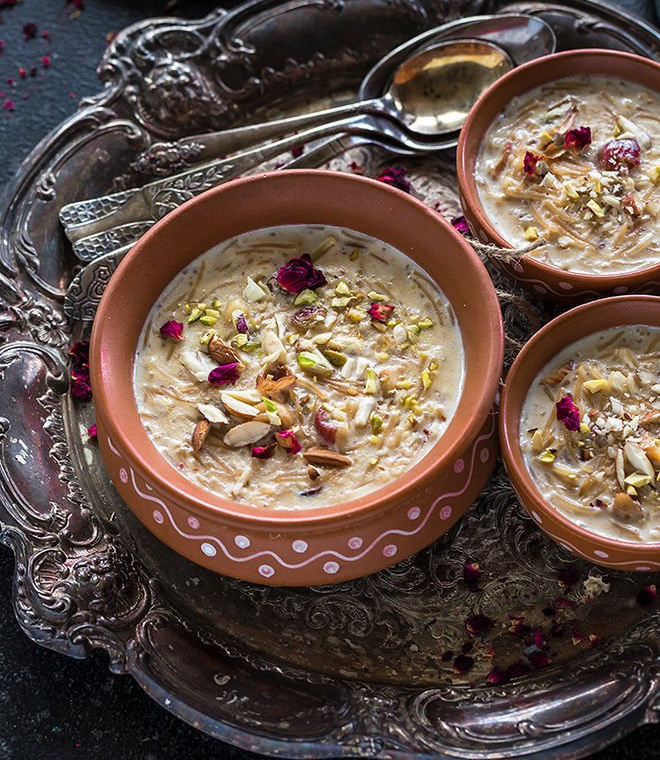
Sheer Khurma
(image source: cookwithmanali)
This dish consists of rice cooked in milk and sugar with raisins, cashews, almonds or pistachios. It is a favourite in Pakistan, India, Bangladesh, and Afghanistan.
Tajine

(image source: medium.com/@abebaebrima)
This slow-cooked stew usually consists of meat, vegetables, and fruit cooked in a clay pot. North African countries such as Morocco and Algeria are known for their tajine dishes.
There are many variations to this dish depending on what region you are from or what type of meat you like to use. Some people like to replace chicken with lamb or beef while others prefer vegetables over fruit.
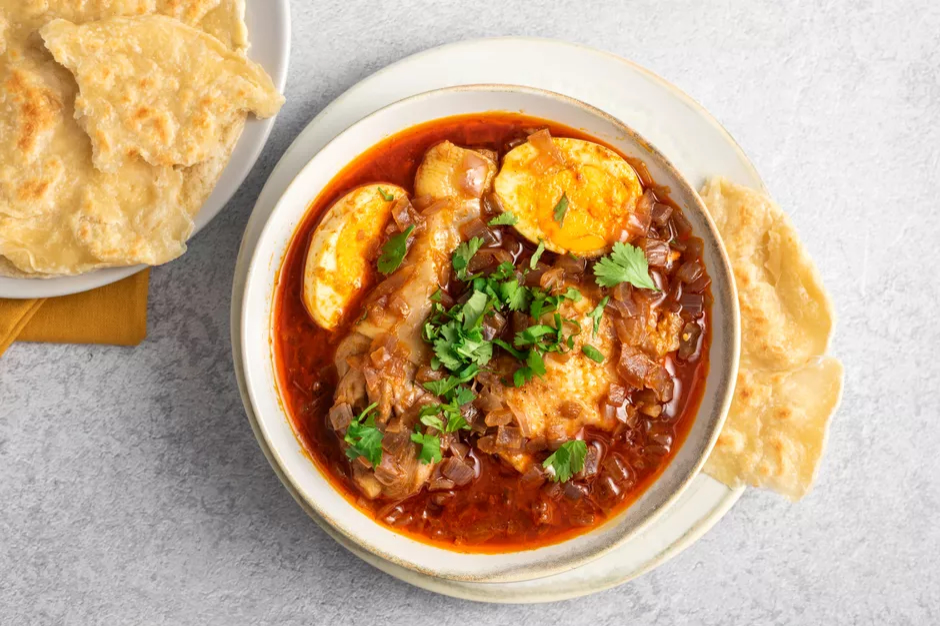
Doro Wat
(image source: thespruceeats)
Doro wat is known as the national dish of Ethiopia. It is a hearty Ethiopian stew that is prepared with chicken and berbere sauce, which is made from chili peppers, cumin, garlic, ginger and other spices.
This dish is often served with injera, which is a type of flatbread made from teff flour and cooked on the side of the stove.
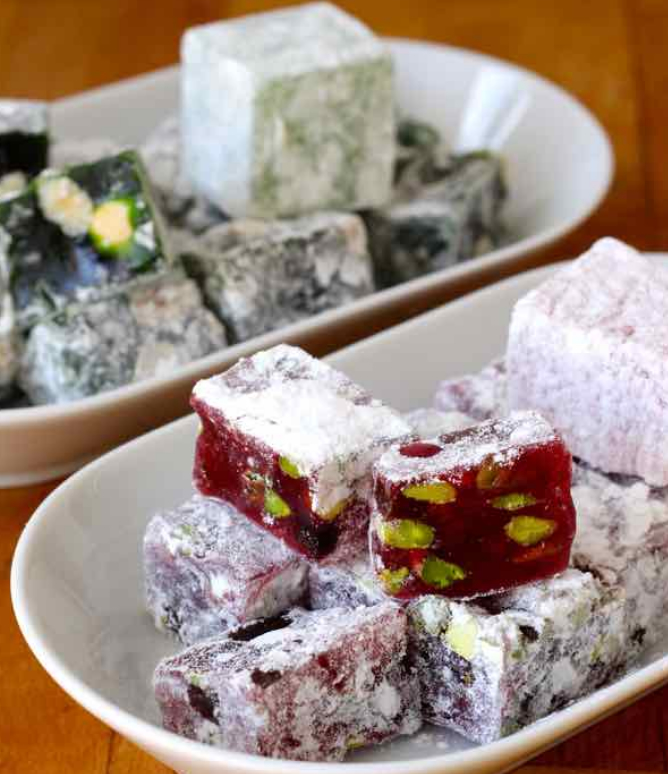
Lokum
(image source: 196flavors)
In Turkey, people have a special tradition of eating sweet treats on Eid. The most popular dessert in Turkey is lokum (called Turkish delight in English) which is a gel-like dessert made from sugar, water, pistachios and starch. In some regions of Turkey, people also make baklava which has a crispy crust with sweet syrup inside.
Lokum comes in many flavours such as cherry, lemon, orange blossom, apricot and rose petal. The most in-demand flavour of lokum is pistachio, which is green in colour and has a nutty taste to it.
Tufahija

(image source: wikipedia)
In Bosnia, Tufahija is a traditional dish eaten on Eid al-Fitr. The dish consists of a poached apple in a thick sauce made from honey, butter and spices. Bosnians also eat this dish on other occasions as well like weddings or birthdays.
Poached apples are prepared by boiling the apples in water until they are soft enough to be pierced with a fork. Then they are drained and put in the sauce, which is heated up until it becomes thick enough to coat the apple slices evenly.
It is typically served elaborately in a huge specific glass covered with whipped cream.
Manti
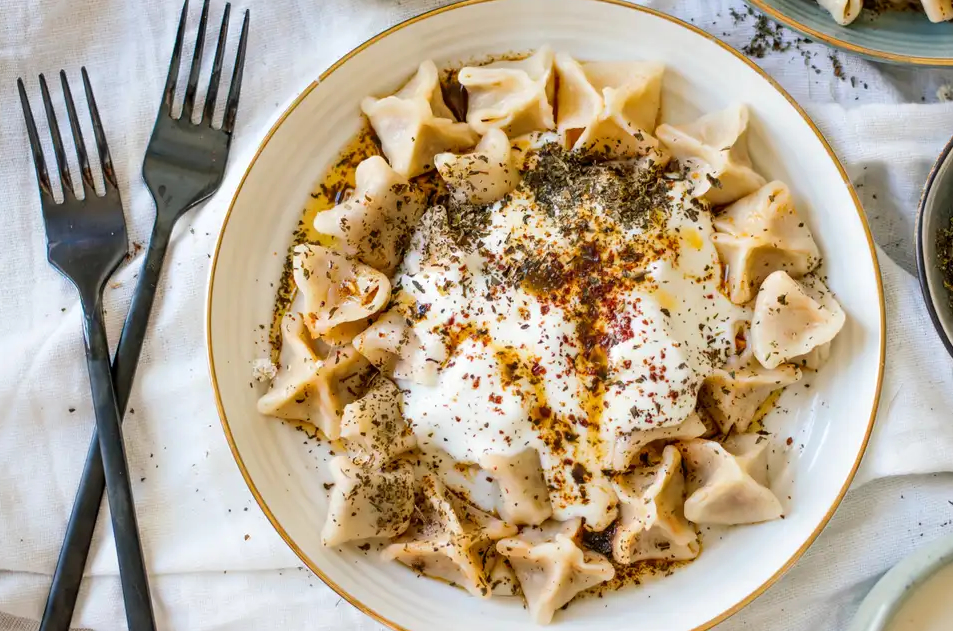
(image source: zuckerjagdwurst)
Manti are Russian dumplings served with yogurt sauce. The dough is made of flour, eggs, and water and the filling is usually meat, potatoes, onions, and spices.
They are served with a yogurt sauce and eaten for breakfast. Manti can also be found in other countries including Turkey where they are called “mantı” or “mantısı.”
Bolani
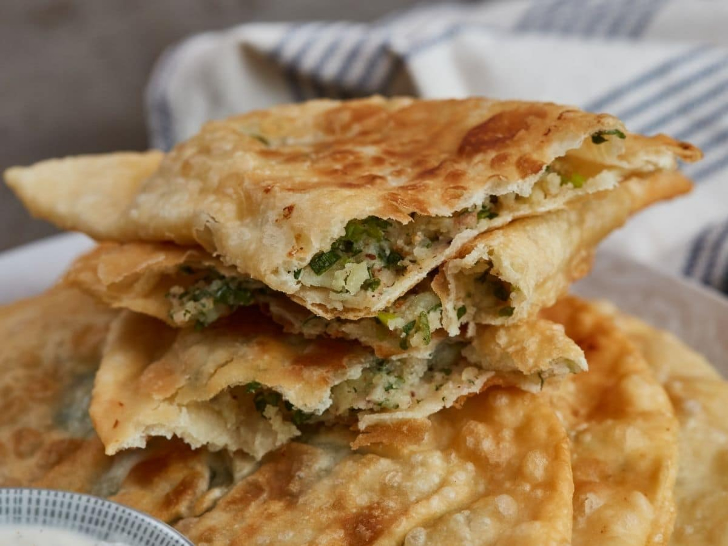
(image source: scrambledchefs)
Bolani is a thin-crusted bread that is typically served as an appetizer or side dish in Afghanistan. It’s usually filled with vegetables, such as potatoes, lentils, or pumpkin and can be topped with yogurt.
Lapis Legit
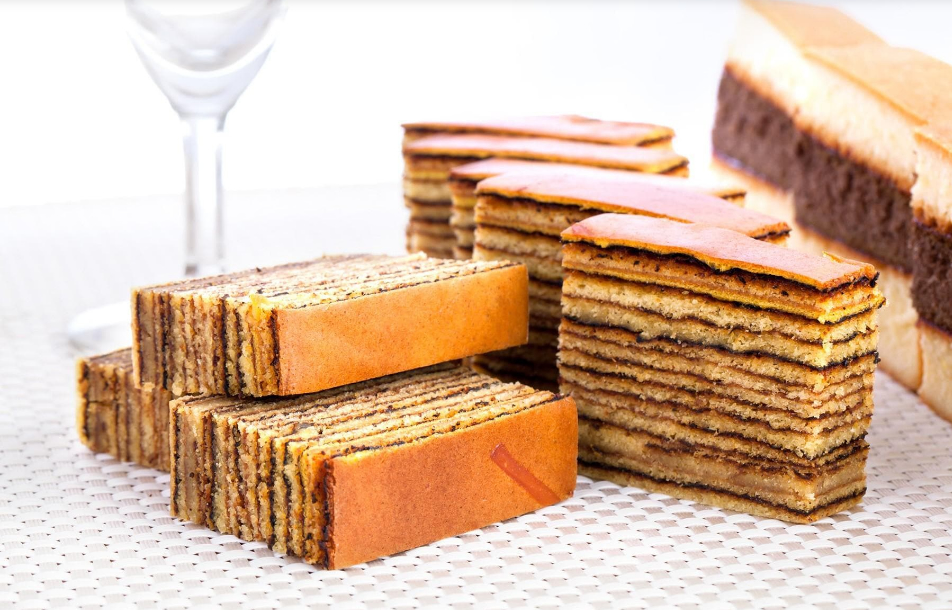
(image source: indonesia.travel)
Lapis legit is a traditional Dutch-Indonesian layered cake that is often eaten on Eid. It’s a delicacy that has been around for centuries and it’s still popular today.
The name of the cake comes from the Dutch word ‘lekker’ which means delicious or tasty. The cake was first introduced in colonial times to Indonesia and it was a way for Dutch people to show their appreciation for Indonesian culture.
Beef Rendang
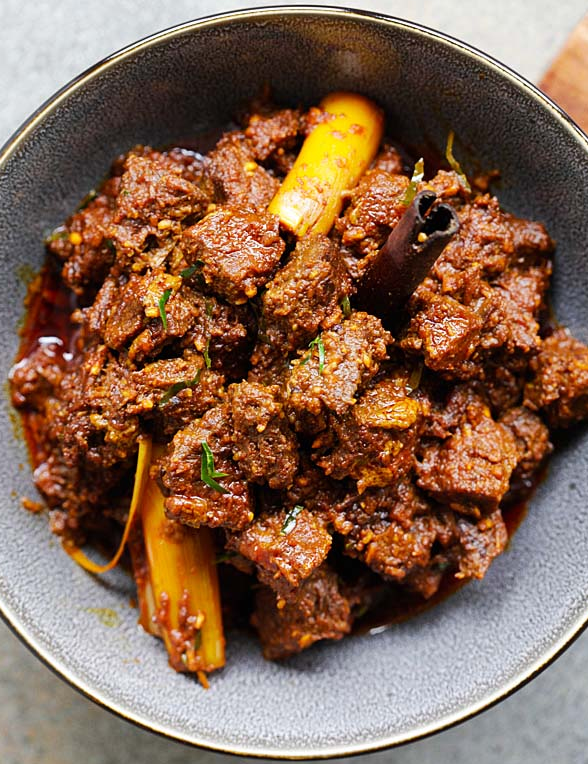
(image source: rasamalaysia)
The main course in Malaysia on Eid is usually beef rendang, which is a spicy dish with beef and coconut milk.
It started from within the Minangkabau ethnic group of Indonesia that saw the meal as an embodiment of their community’s culture. The meat signifies the leaders/royalty/elders, coconut milk the teachers as well as authors, chilli the spiritual leaders, and the mix of spice is the rest of the community.
5. What is Zakat al-Fitr?
Zakat al-Fitr, also known as Fitrana, is an obligatory form of charity given by Muslims at the end of the Islamic holy month of Ramadan, just before the celebration of Eid ul Fitr. It is one of the key practices of Islam, designed to purify those who fast from any indecent act or speech and to help the needy and the poor. The giving of Zakat al-Fitr ensures that everyone, regardless of their financial situation, can partake in the joy and celebrations of Eid ul Fitr.
The amount of Zakat al-Fitr is not large; it is meant to be equal to the cost of one meal for a single person. Traditionally, this charity was given in the form of staple foods of the community, such as barley, dates, raisins or wheat. However, in modern practice, it is often given as a monetary donation, which allows for more flexibility in addressing the specific needs of the recipients. The primary purpose of Zakat al-Fitr is to ensure that no one is left hungry or in need during the festive days of Eid and to foster a sense of solidarity and compassion among the Muslim community.
6. How Is Zakat al-Fitr Transforming Charity and Addressing Social Issues During Eid ul-Fitr?
Eid ul Fitr, marking the end of Ramadan, is not only a time for celebration but also a profound moment for reflection, gratitude and giving back to the community. Central to this festive occasion is the practice of Zakat al-Fitr, a form of charity obligatory upon all Muslims who have the means. This act of giving, deeply embedded in Islamic tradition, aims to purify those who fast from any indecent act or speech and to help the poor and needy. In recent years, innovative charity initiatives and a renewed focus on addressing contemporary social issues through Zakat al-Fitr have emerged, highlighting the dynamic nature of this practice in the modern world.
The Evolving Nature of Zakat al-Fitr
Traditionally, Zakat al-Fitr involves giving a specific amount of food to those in need before the Eid prayers. However, the modern era has seen a shift towards monetary donations, which are often more practical and can address a broader range of needs. This flexibility has allowed for a more tailored approach to charity, ensuring that aid reaches those who need it most in a form that is most beneficial to them.
Innovative Charity Initiatives
In recent years, charity organisations have become increasingly creative in how they collect and distribute Zakat al-Fitr. Online platforms and apps now enable donors to fulfil their obligations with ease, ensuring timely and efficient delivery of aid to the intended recipients. These digital solutions have proven particularly valuable in reaching remote or underserved areas where traditional means might not suffice.
Some notable initiatives include:
- Virtual Food Banks: Leveraging technology, some organisations have set up virtual food banks, allowing donors to purchase food items online that are then directly distributed to families in need.
- Crowdfunding Campaigns: Numerous crowdfunding platforms have dedicated Eid campaigns where individuals can contribute to larger projects, such as building wells, schools or medical facilities in impoverished regions.
- Gift Matching Programs: Businesses and corporations have also stepped in, offering to match the Zakat contributions of their employees, thereby doubling the impact of individual donations.
Addressing Contemporary Social Issues
Zakat al-Fitr’s role extends beyond mere financial assistance; it is a powerful tool for social solidarity and cohesion. Recognising this, many initiatives now aim to address broader social issues:
- Education and Empowerment: Projects focusing on education, skill development and empowerment are increasingly popular Zakat al-Fitr destinations, offering long-term benefits to recipients and their communities.
- Healthcare Access: In regions plagued by healthcare disparities, Zakat funds are used to provide essential medical services, vaccinations and health education.
- Refugee Support: With ongoing global conflicts displacing millions, a significant portion of Zakat al-Fitr is directed towards refugee aid, providing not only basic necessities but also psychological support and integration assistance.
Impactful Charity Projects
Several projects launched around Eid have had a profound impact, illustrating the potential of Zakat al-Fitr when harnessed effectively:
- In war-torn areas, Zakat al-Fitr has funded mobile clinics, offering life-saving medical care to communities cut off from traditional healthcare facilities.
- Educational scholarships funded by Zakat have enabled countless young people from underprivileged backgrounds to pursue higher education and break the cycle of poverty.
- In regions affected by natural disasters, Eid charity drives have contributed to rebuilding efforts, providing not only immediate relief but also supporting long-term recovery and resilience building.
The practice of charity in Eid ul-Fitr, particularly through Zakat al-Fitr, embodies the spirit of communal well-being, empathy and shared humanity. As the world evolves, so too do the methods and impacts of these charitable acts, reflecting the adaptability and enduring relevance of Islamic teachings in addressing the needs of contemporary society. Through innovative approaches and a focus on sustainable development, the role of Zakat al-Fitr in fostering a more equitable world continues to expand, capturing the essence of Eid as a celebration of generosity and community.
